PMV/PPD Thermal Comfort Simulation
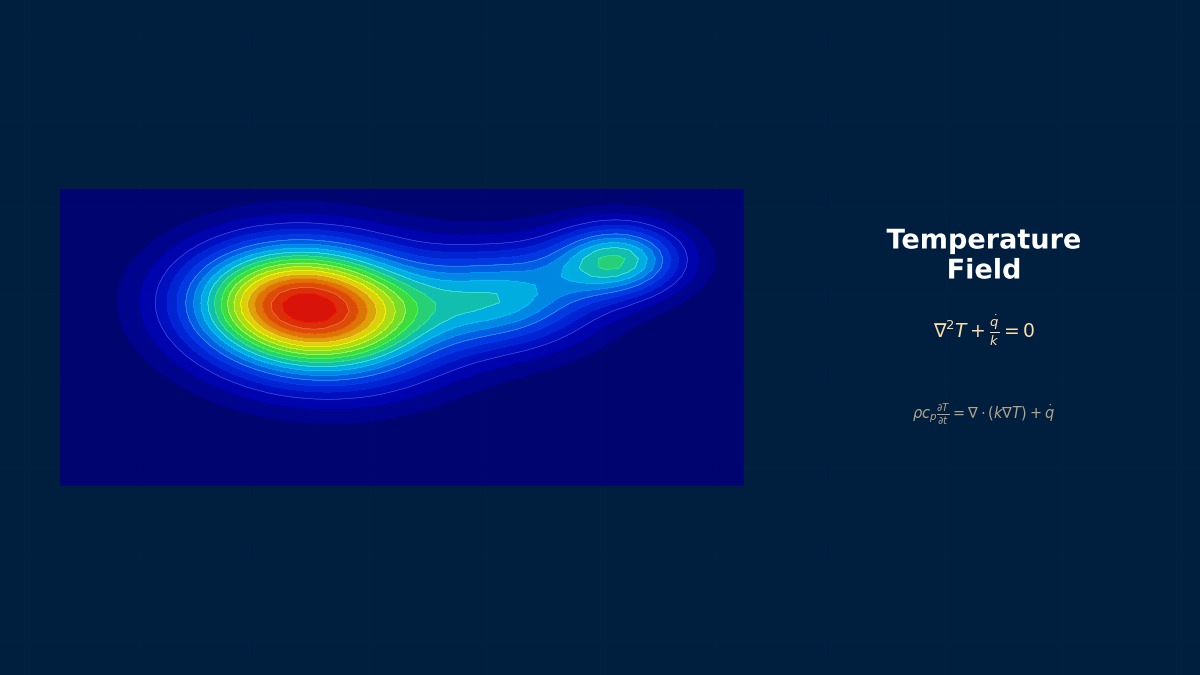
PMV/PPD Thermal Comfort: Theoretical Foundations
Overview of the PMV Model
Professor, I heard that PMV can "quantify comfort," but is that really true? Isn't comfort subjective?
Good question. PMV (Predicted Mean Vote) is an index proposed by Danish engineer Ole Fanger in 1970. It's precisely a formula to "statistically predict the subjective feelings of a large number of people."
Can you put subjective feelings into a formula? How?
Fanger conducted a large-scale experiment with 1396 subjects. Under various temperature, humidity, and air velocity conditions, they rated their sensation on a 7-point scale from "cold" to "hot" (-3 to +3). He then linked that statistical data to the human body's heat balance equation. Roughly speaking, if the balance between the heat produced by the body and the heat dissipated to the environment is maintained, then PMV=0 (neutral = comfortable). If there is excess heat, PMV>0 (hot); if there is insufficient heat, PMV<0 (cold).
I see, so it quantifies the degree of imbalance in the heat budget. In what situations is it actually used?
Its most common use is in HVAC design for office buildings and commercial facilities. At the design stage, CFD (Computational Fluid Dynamics) is used to calculate indoor temperature and airflow. By creating contour plots of PMV at each point on the design drawings, issues like "this seat is too cold" or "the window area is too hot" become immediately apparent. ISO 7730 defines PMV within ±0.5 as "comfortable."
Physical Meaning of the Six Factors
I heard PMV is determined by six factors. What does each one mean?
The six factors are broadly divided into four environmental factors and two human factors. This is an important point.
| Factor | Symbol | Unit | Typical Value (Office) | Physical Meaning |
|---|---|---|---|---|
| Air Temperature | $T_a$ | °C | 22~26 | Directly affects convective heat transfer |
| Mean Radiant Temperature | $\bar{T}_r$ | °C | 20~28 | Composite effect of infrared radiation from surrounding surfaces |
| Relative Air Velocity | $v_a$ | m/s | 0.1~0.3 | Rate of heat removal from body surface via convection |
| Water Vapor Partial Pressure | $p_a$ | Pa | 1000~1500 | Driving force for sweat evaporation (humidity effect) |
| Metabolic Rate | $M$ | W/m² | 58~70 (seated) | Internal heat generation of the human body. 1 met = 58.15 W/m² |
| Clothing Insulation | $I_{cl}$ | clo | 0.5~1.0 | Thermal insulation of clothing. 1 clo = 0.155 m²K/W |
Units like "met" and "clo" are quite unique. What are their specific values?
1 met is the metabolic rate of "a person sitting quietly in a chair," equivalent to 58.15 W/m². Walking is about 2 met, light exercise around 3 met. 1 clo of clothing insulation is roughly "a typical business suit." Light summer clothing is about 0.5 clo, a winter coat around 1.5 clo. In practice, these two settings significantly affect the results, so it's important to explicitly define them as design conditions.
Formulation of the PMV Equation
What does the PMV equation look like?
The core of the PMV equation is a two-step process: first, find the "thermal load on the body $L$," then convert it to a subjective rating scale. The overall form is as follows:
Here, $L$ is the thermal load on the body (internal heat production minus various heat loss pathways), expanded as follows:
Wow, that's a long equation... What does each term represent?
Let me explain them in order:
- $(M - W)$: Net internal heat production (metabolic rate minus external work). For desk work, $W \approx 0$.
- Term 2: Heat loss due to insensible perspiration (evaporation you don't feel) from the skin.
- Term 3: Heat loss due to sweat evaporation. Activates when metabolic rate exceeds 58.15 W/m² (1 met).
- Term 4: Respiratory latent heat. Heat loss due to the difference in water vapor content between inhaled and exhaled air.
- Term 5: Respiratory sensible heat. Heat loss required to warm inhaled air to body temperature.
- Term 6: Radiative heat exchange from the outer surface of clothing. Based on the Stefan-Boltzmann law.
- Term 7: Convective heat exchange from the outer surface of clothing.
Here, $f_{cl}$ is the clothing area factor (how much the surface area increases due to clothing), $T_{cl}$ is the clothing surface temperature, and $h_c$ is the convective heat transfer coefficient. $T_{cl}$ itself also needs to be found iteratively from $T_a$, $\bar{T}_r$, and $I_{cl}$, which is the most troublesome part in program implementation.
PPD (Predicted Percentage of Dissatisfied)
You can also predict the "percentage of dissatisfied people" from PMV, right? What is PPD?
PPD (Predicted Percentage of Dissatisfied) is a formula that predicts the "percentage of people who feel dissatisfied with that environment" from the PMV value. The formula is:
Huh? Even with PMV=0 (perfectly neutral), PPD isn't 0?
Sharp observation. When PMV=0, PPD=5%. This means no matter how perfect the environment, at least 5% of people will feel uncomfortable—a statistical fact built into the model. This reflects individual differences in human thermal sensation. In practice, PPD<10% (corresponding to PMV ±0.5) is often the design target.
| PMV | PPD (%) | Subjective Rating | ISO 7730 Category |
|---|---|---|---|
| 0 | 5 | Neutral (Comfortable) | A (PPD<6%) |
| ±0.5 | 10 | Slightly Warm/Slightly Cool | B (PPD<10%) |
| ±0.7 | 15 | — | C (PPD<15%) |
| ±1.0 | 26 | Warm/Cool | Outside Standard |
| ±2.0 | 77 | Hot/Cold | Outside Standard |
ISO 7730 and ASHRAE 55
What international standards exist for PMV/PPD?
There are two main standards:
- ISO 7730 (International Standard): Specifies the PMV/PPD calculation method and comfort categories A/B/C. Standard for HVAC design in Europe.
- ASHRAE Standard 55 (American Standard): Includes the PMV method plus the Adaptive Comfort Model for naturally ventilated buildings. Often adopted in global projects.
In Japan, SHASE-S102 (Society of Heating, Air-Conditioning and Sanitary Engineers of Japan standard) is based on ISO 7730. In practice, design documents often state "target ISO 7730 Category B or higher."
Fanger and the 1396 Subject Experiment
Ole Fanger (1934–2006) was a professor at the Technical University of Denmark. He presented the prototype of the PMV model in his 1967 doctoral dissertation. The experiment was unusually large-scale for its time, using a climate chamber that could precisely control temperature, humidity, and air velocity. Subjects, under various clothing and activity conditions, voted on a 7-point thermal sensation scale. The approach of linking statistical data to the human body's heat balance equation was groundbreaking, and it was standardized as ISO 7730 in 1984. Fanger is called the "father of comfort engineering," and his formula remains the foundation of HVAC design worldwide even after 50+ years.
Numerical Methods and CFD Coupling
Basic Strategy for CFD-PMV Coupling
Since the PMV equation itself is algebraic, why bother coupling it with CFD? Can't you just calculate it by measuring room temperature and humidity?
If you're just calculating from a single point's temperature and humidity, a calculator is enough. But in actual indoor spaces, temperature and airflow vary significantly from place to place. For example, right under a ceiling air supply diffuser, the air velocity might be 0.5 m/s and it's cool, but 3 meters away by the window, it's hot due to radiation—to visualize this spatial distribution, CFD becomes essential.
I see. So the flow is: calculate the temperature and velocity fields with CFD, then plug them into the PMV equation?
Exactly. There are two main coupling strategies:
- Post-processing Type (One-way): After obtaining a steady-state CFD solution, retrieve $T_a$, $v_a$, and humidity to get $p_a$ for each mesh cell. Calculate $\bar{T}_r$ from the radiation model. Provide $M$ and $I_{cl}$ as design conditions and calculate PMV. This is the most common approach.
- Coupled Type (Two-way): Place a human manikin model in the CFD, reflecting body heat and sweat generation as source terms. More accurate but requires greater modeling effort.
In practice, the post-processing type is often sufficient. The impact of body heat generation on the overall room temperature field is small compared to the HVAC capacity.
Discretization of Human Body Heat Balance
When calculating PMV from field data obtained by CFD, what kind of program do you actually write?
For Ansys Fluent, UDF (User-Defined Function) is standard; for STAR-CCM+, Field Function. The following steps are executed for each mesh cell:
- Retrieve the cell's $T_a$ (air temperature), $v_a$ (absolute value of velocity vector), $p_a$ (water vapor partial pressure) from CFD results.
- Calculate $\bar{T}_r$ (mean radiant temperature) from radiation model results or Surface-to-Surface radiation.
- Input $M$, $W$, $I_{cl}$ as design conditions (usually constants).
- Iteratively calculate $T_{cl}$ using the Newton-Raphson method (initial value 35°C, convergence criterion $10^{-3}$°C).
- Calculate thermal load $L$ by summing each term.
- Evaluate PMV = [0.303·exp(-0.036M) + 0.028]·$L$.
- Calculate PPD = 100 - 95·exp(-0.03353·PMV⁴ - 0.2179·PMV²).
The computational load itself is light—the problem lies in the accuracy of the CFD's temperature and velocity fields. Especially, the accuracy of the radiant temperature greatly affects the results.
CFD Calculation of Radiant Temperature
How do you calculate the mean radiant temperature $\bar{T}_r$ in CFD? I have the impression that typical CFD only outputs temperature and wind speed...
This is a very important point. $\bar{T}_r$ is the "equivalent temperature" synthesizing infrared radiation from all surrounding surfaces, measured in principle with a globe thermometer. In CFD, the following approaches exist:
- Surface-to-Surface (S2S) Radiation Model: Calculates view factors and solves radiative heat exchange between surfaces. High accuracy but computationally expensive.
- Discrete Ordinates (DO) Model: Solves radiative intensity in space by directional discretization. Needed when participating media (smoke, gas) are present.
- Simplified Formula: Approximates $\bar{T}_r$ as a weighted average of wall temperatures and view factors. Fast calculation, effective when wall temperature differences are small.
The simplified formula is approximated as follows:
Here, $F_{p-i}$ is the view factor (shape factor) from the evaluation point to each surface $i$, and $T_{s,i}$ is the absolute temperature of surface $i$.
Mesh Strategy and Occupied Zone Definition
Is anything special needed for the CFD mesh for PMV evaluation?
The important things are the definition of the Occupied Zone and mesh resolution. ISO 7730 defines the occupied zone as "the area from 0.1m to 1.8m above the floor (standing) or 1.1m (seated), and at least 0.5m away from external walls." PMV evaluation is performed within this occupied zone.
Key mesh points:
- Inside Occupied Zone: Uniform mesh with 50–100mm spacing. Accurately captures temperature and velocity gradients.
- Around Air Supply Outlets: Fine mesh of 10–20mm or less. Resolves initial behavior of jet flow.
- Near Walls: y⁺ ≈ 1 (Low-Re wall function) or y⁺ = 30–300 (wall function). Directly linked to radiant temperature accuracy.
- Non-occupied zones like ceiling plenums, underfloor: Coarse mesh possible to reduce computational cost.
PMV/PPD Thermal Comfort in Practice
Analysis Workflow
When running a PMV simulation in practice, what steps do you follow?
A typical workflow is as follows:
- Import Architectural CAD Model: Import BIM model (Revit/IFC) or CAD data into CFD preprocessor. Keep walls, windows, ceilings, floors as separate surfaces.
- Place HVAC Equipment: Set diffuser type (anemostat, linear, etc.) and supply conditions (airflow rate, temperature, angle).
- Set Boundary Conditions: External wall temperature (or thermal transmittance + outdoor temperature), solar radiation on windows, internal heat gains (lighting, office equipment, occupants).
- CFD Calculation: Obtain steady-state solution using RANS (k-ε or SST k-ω). For indoor airflow, SST k-ω generally provides better accuracy.
- PMV/PPD Post-processing: Output PMV contour plots on horizontal sections of the occupied zone (FL+0.6m, FL+1.1m, FL+1.7m).
- Identify Problem Zones and Countermeasures: For zones exceeding PMV ±0.5, modify diffuser positions or adjust airflow rates and recalculate.
Setting Boundary Conditions
What should you pay particular attention to when setting boundary conditions?
Related Topics
Gain hands-on intuition into this field with our interactive simulators
All Simulators