Electromagnetic Field Analysis of Microstrip Lines
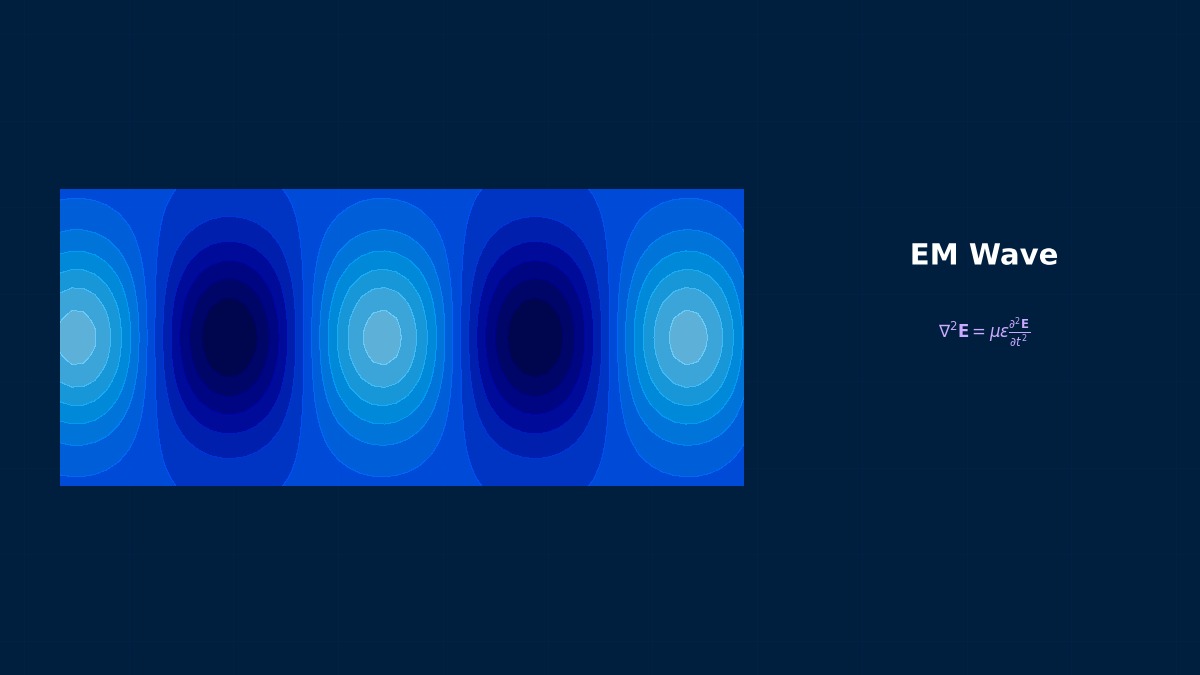
Electromagnetic Field Analysis of Microstrip Lines: Theoretical Foundations
What is a Microstrip Line?
So, a microstrip line is essentially the wiring pattern on a printed circuit board, right? Why is electromagnetic analysis necessary?
Good question. In low-frequency digital circuits, wiring is just a "connection." But in the GHz band, the wavelength becomes comparable to the board size, and the wiring behaves as a transmission line. Impedance mismatch causes signal reflection and waveform distortion.
How critical is it, specifically?
For example, USB 3.2 and PCIe Gen5 require 90 $\Omega$ differential impedance to be managed within $\pm 5\%$. Deviating from this causes the eye pattern to close and increases bit errors. For 5G base station RF front-ends, sometimes 50 $\Omega$ is targeted within $\pm 2\%$. That's why electromagnetic field simulation is essential.
A microstrip line is a planar transmission line structure with a conductor strip on one side of a dielectric substrate and a ground plane on the opposite side. It is the most widely used structure in PCBs (Printed Circuit Boards) and MMICs (Monolithic Microwave Integrated Circuits).
Because the structure is open (the top surface is exposed to air), it cannot support a pure TEM mode; instead, a quasi-TEM mode propagates. At low frequencies, the TEM approximation holds, but as frequency increases, TE/TM components become non-negligible, causing dispersion.
Theoretical Formulas for Characteristic Impedance
So, how do you calculate that impedance? Do you need a CAD tool right away?
First, there are approximation formulas usable for hand calculations. The Hammerstad-Jensen (1980) formula is the most used in practice, with separate cases for $w/h > 1$ and $w/h \leq 1$. Its accuracy is within about 1% for $\varepsilon_r \leq 16$, $0.05 \leq w/h \leq 20$.
Narrow line ($w/h \leq 1$) case:
Wide line ($w/h > 1$) case:
Also, a simplified formula compliant with IPC-2141, which includes conductor thickness $t$, is widely used:
To get 50 $\Omega$ on an FR4 board, what line width is needed specifically?
For FR4 ($\varepsilon_r \approx 4.3$) with substrate thickness $h = 0.2\,\text{mm}$ and copper foil thickness $t = 35\,\mu\text{m}$, $w \approx 0.36\,\text{mm}$ gives 50 $\Omega$. Since $w/h \approx 1.8$, you use the wide line formula. In practice, it's standard to verify with a 2D cross-section solver (e.g., SIwave).
Effective Permittivity and Dispersion
What is $\varepsilon_{eff}$ in the formula? Is it different from the substrate permittivity $\varepsilon_r$?
Since the electric field in a microstrip straddles both the dielectric and air, the permittivity "felt" by the electromagnetic wave is an intermediate value between $\varepsilon_r$ and 1 (air). This is the effective permittivity $\varepsilon_{eff}$.
For example, for FR4 ($\varepsilon_r = 4.3$) with $w/h = 2$, $\varepsilon_{eff} \approx 3.3$. This reduces the propagation velocity to $v = c/\sqrt{\varepsilon_{eff}} \approx 1.65 \times 10^8\,\text{m/s}$, about 55% of that in vacuum.
However, as frequency increases, the electric field concentrates more in the dielectric, so $\varepsilon_{eff}$ asymptotically approaches $\varepsilon_r$ with frequency. This dispersion is described by Kirschning's frequency-dependent formula:
Here, $f_p = Z_0 / (2\mu_0 h)$ is a frequency parameter, and $G$ is a geometry-dependent constant. This dispersion causes high-frequency components of pulse signals to be delayed, leading to edge rounding and ISI (Inter-Symbol Interference).
Loss Mechanisms
Signals attenuate on real boards, right? What types of losses are there?
There are three main types: conductor loss, dielectric loss, and radiation loss. Conductor loss dominates in the low GHz band, and dielectric loss becomes significant above 10 GHz.
Conductor loss ($\alpha_c$) increases proportionally to the square root of frequency due to the skin effect:
Here, $R_s$ is the surface resistance, and $\sigma$ is the conductivity (copper: $5.8 \times 10^7\,\text{S/m}$). Furthermore, real copper foil has surface roughness, requiring the $R_s$ to be increased by a factor of 1.4 to 2 using the Hammerstad-Bekkadal correction.
Dielectric loss ($\alpha_d$) is described by the loss tangent $\tan\delta$:
| Substrate Material | $\varepsilon_r$ | $\tan\delta$ | Application |
|---|---|---|---|
| FR4 | 4.2–4.5 | 0.02 | General Digital (up to ~3 GHz) |
| Megtron 6 | 3.7 | 0.002 | High-Speed Digital (up to ~25 GHz) |
| Rogers RO4003C | 3.55 | 0.0027 | RF/Microwave |
| Rogers RT/duroid 5880 | 2.20 | 0.0009 | Millimeter Wave (77 GHz Automotive Radar) |
| Alumina ($\text{Al}_2\text{O}_3$) | 9.8 | 0.0001 | MMIC Substrate |
Governing Equations
The "equations" solved by CAE, are they ultimately Maxwell's equations?
Exactly. The starting point for all electromagnetic field analysis is Maxwell's equations. Assuming a time-harmonic field ($e^{j\omega t}$ dependence) gives the frequency domain form.
Eliminating $\mathbf{E}$ from these yields the vector wave equation:
Here, $k_0 = \omega\sqrt{\mu_0\varepsilon_0} = 2\pi f / c$ is the free-space wavenumber. Discretizing and solving this equation using numerical methods like FEM, FDTD, or MoM constitutes the electromagnetic field simulation of microstrip lines.
The "Quasi-TEM Mode": A Product of Compromise
Microstrip lines do not support a true TEM wave (zero longitudinal component). As long as there are two media—substrate (dielectric) and air—a "quasi-TEM mode" with mixed TM components propagates. Characteristic impedance can be obtained with the Hammerstad-Jensen approximation formula (1980) to within 1% accuracy, but dispersion becomes significant at high frequencies. Actually, in the 1970s, stripline had superior electrical characteristics, but microstrip is easier for component mounting. Ultimately, microstrip won due to the trade-off between "physical compromise" and "manufacturing ease." In CAE, rigorous analysis using FEM, FDTD, and MoM is used for practical evaluation of "dispersion characteristics," precisely estimating effective permittivity and loss at the design frequency.
Computational Methods for Electromagnetic Field Analysis of Microstrip Lines
Frequency Domain Analysis Using FEM
How do you choose which numerical method to use for analyzing microstrip lines?
There are three main ones. FEM (Finite Element Method) solves in the frequency domain, one frequency at a time. Adaptive Mesh Refinement runs automatically, making it easy to use even for complex 3D structures. It's the main engine of Ansys HFSS.
In FEM, the vector wave equation is transformed into a weak form and discretized using edge elements (Nedelec elements). In the frequency domain, at each frequency point, a linear equation system is solved:
Here, $[S]$ is the stiffness matrix (from the $\nabla \times$ operator), $[T]$ is the mass matrix (from $\varepsilon_r$), and $\{b\}$ is the port...
Related Topics
Experience the theory firsthand with the interactive simulator for this field
All Simulators