Electromagnetic Analysis of Beamforming Antenna Arrays
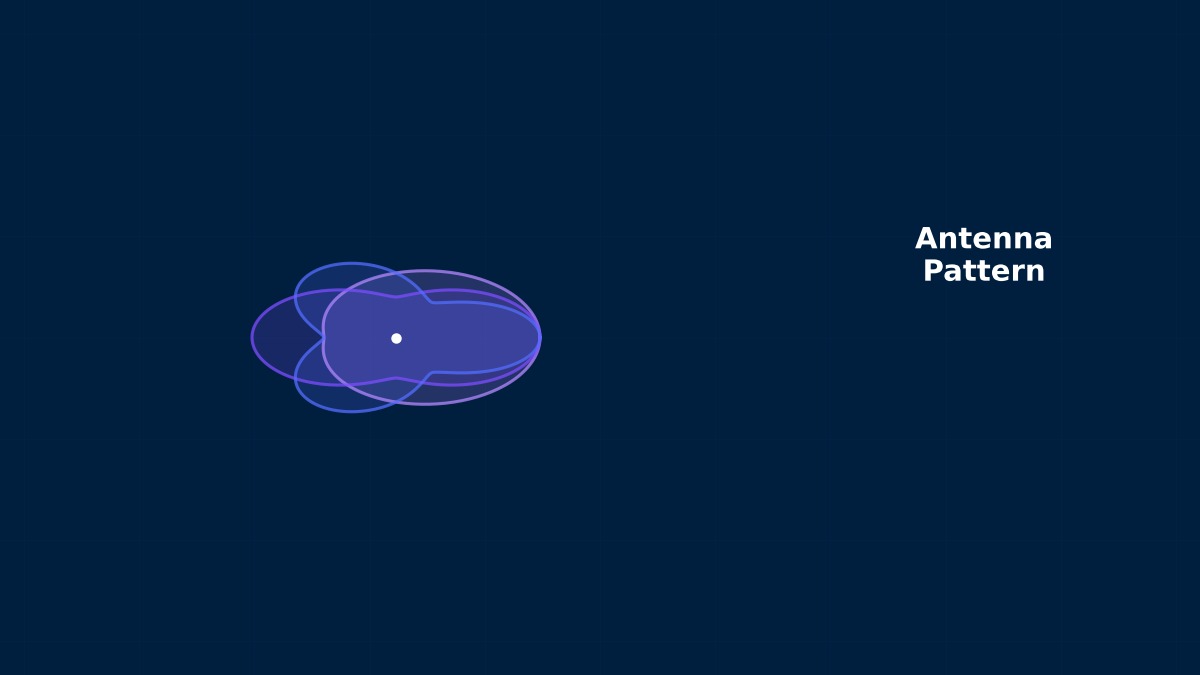
Electromagnetic Analysis of Beamforming Antenna Arrays: Theoretical Foundations
What is Beamforming?
I often hear about beamforming in 5G, but what exactly does it do?
Simply put, it's a technology that controls the phase of multiple antenna elements to concentrate the radio wave beam in a specific direction. If you line up dozens of speakers and play sound with staggered timing, the sound becomes louder only in a certain direction, right? Beamforming applies the same principle to radio waves.
I see! So how is it used in 5G base stations?
5G base stations use Massive MIMO arrays with 128 elements or more to direct individual beams to each user. It's an evolution from the traditional "fluorescent light illuminating the entire room" approach to a "spotlight illuminating each person individually" approach. This dramatically improves SINR (Signal-to-Interference-plus-Noise Ratio).
When dealing with beamforming in electromagnetic analysis, what are the particularly difficult points?
Accurately modeling the mutual coupling between elements. Ignoring this can cause side lobes to become larger than expected or null directions to shift. Especially with dense spacing where d < 0.5λ, mutual coupling is intense, and simply multiplying isolated element patterns (Pattern Multiplication) yields very poor accuracy.
Array Factor
I see the array factor formula in textbooks, but I don't quite grasp it intuitively...
For an N-element Uniform Linear Array (ULA), the array factor is as follows:
The meaning of each parameter is as follows:
- $N$ — Number of array elements
- $w_n$ — Amplitude weight of the $n$-th element (used for tapering)
- $k = 2\pi/\lambda$ — Wavenumber (free-space)
- $d$ — Element spacing
- $\theta$ — Angle from broadside
- $\beta_n$ — Phase shift applied to the $n$-th element
Intuitively speaking, the radio waves emitted by each element have a "wavefront arrival timing" offset by $d \sin\theta$. The direction where this offset and the artificially added phase $\beta_n$ cancel each other out is where the waves from all elements constructively interfere—that's the main beam.
For example, with an array of N=8 and half-wavelength spacing d=λ/2, what would be the 3dB beamwidth of the main beam?
For uniform amplitude, the HPBW (Half-Power Beamwidth) at broadside is approximately:
Substituting $N=8$, $d=\lambda/2$ gives $\mathrm{HPBW} \approx 0.886/(8 \times 0.5) = 0.221\,\mathrm{rad} \approx 12.7°$. The more elements you add, the sharper the beam becomes. With a 128-element 5G array, it can be narrowed down to $\approx 1°$.
Beam Steering and Phase Control
How do you steer the beam to a desired direction?
Set the phase shift $\beta_n$ for each element as follows:
Here, $\theta_s$ is the steering angle. Setting this phase causes the exponential term inside AF to become zero in the direction $\theta = \theta_s$, meaning all elements add up in phase. For example, for a 28GHz 5G base station wanting to steer to $\theta_s = 30°$, the phase difference between adjacent elements is $\Delta\beta = -k \cdot d \cdot \sin 30° = -\pi/2$ (when d=λ/2).
I heard the beamwidth changes when you steer it...
Good observation. When you steer the beam, the effective aperture of the array shrinks by a factor of $\cos\theta_s$. Therefore, the beamwidth broadens to $\mathrm{HPBW}(\theta_s) \approx \mathrm{HPBW}_0 / \cos\theta_s$. At $\theta_s = 60°$, it's twice the broadside width. In practice, gain degradation becomes severe for steering beyond $\pm 60°$, so sectorization is often used.
Grating Lobe Condition
What is a grating lobe? Is it different from a side lobe?
A grating lobe is a false beam with the same intensity as the main beam. Side lobes are weaker than the main beam, but grating lobes are "another main beam" of equal strength appearing in an unintended direction. It gets its name from the same physics as a diffraction grating.
The condition for grating lobes to not enter the visible region ($|\sin\theta| \le 1$) is:
| Steering Angle $\theta_s$ | Element Spacing Upper Limit | Specific Value at 28GHz Band |
|---|---|---|
| 0° (Broadside) | $d < \lambda$ | $d < 10.7\,\mathrm{mm}$ |
| 30° | $d < 0.67\lambda$ | $d < 7.1\,\mathrm{mm}$ |
| 60° | $d < 0.54\lambda$ | $d < 5.7\,\mathrm{mm}$ |
| Omnidirectional Coverage | $d < 0.5\lambda$ (Conservative) | $d < 5.35\,\mathrm{mm}$ |
In practice, $d = 0.5\lambda$ is standard. However, in sub-6GHz bands, it's easier to maintain $d = 0.5\lambda$ due to physical size constraints of the elements, but in mmWave bands, manufacturing tolerances between elements become problematic.
Mutual Coupling Between Elements
You said "mutual coupling is important" at the beginning. How much impact does it actually have?
It's easier to understand with numbers. For example, comparing a patch antenna array with $d = 0.5\lambda$ when mutual coupling is ignored versus when it's considered:
- Side Lobe Level (SLL): Ignored → -26dB / Considered → -18dB (8dB degradation)
- Null Depth: Ignored → -60dB / Considered → -30dB (null becomes shallower)
- Main Beam Direction: Up to 1.5° pointing error
- Input Impedance: Up to 20% variation depending on element position (edge element vs. center element)
An 8dB difference! How do you perform analysis that considers mutual coupling?
There are three main approaches:
- Full-Wave Analysis of All Elements: Solve all elements simultaneously using FEM or MoM. Most accurate, but enormous computational cost for 128 elements.
- Embedded Element Pattern: Excite only one element in the array with the others terminated in matched loads, and obtain its pattern. Repeat for N elements. Good balance between computational cost and accuracy.
- Coupling Matrix Correction: Measure/calculate the mutual coupling components $S_{ij}$ of the S-parameters and correct the weight vector using $\mathbf{w}_{\mathrm{corrected}} = \mathbf{C}^{-1}\mathbf{w}_{\mathrm{ideal}}$.
Beamforming and the "Cocktail Party Effect"
The "cocktail party effect," where you can pick out a specific person's voice in a noisy party, works because the brain uses the interaural time difference (ITD) between the two ears to estimate direction. The mathematical essence of beamforming is exactly the same: by applying appropriate phase delays to the signals from each element and summing them, signals from a specific direction are emphasized. Human hearing is an array of just 2 elements (left and right ears), but a 5G base station has 128 elements. Imagine a superhuman with 128 ears individually listening to everyone's conversations at a party—that's the image of Massive MIMO beamforming.
Related Topics
Experience the theory firsthand with the interactive simulator for this field
All Simulators