CAE Analysis of Parabolic Reflector Antennas
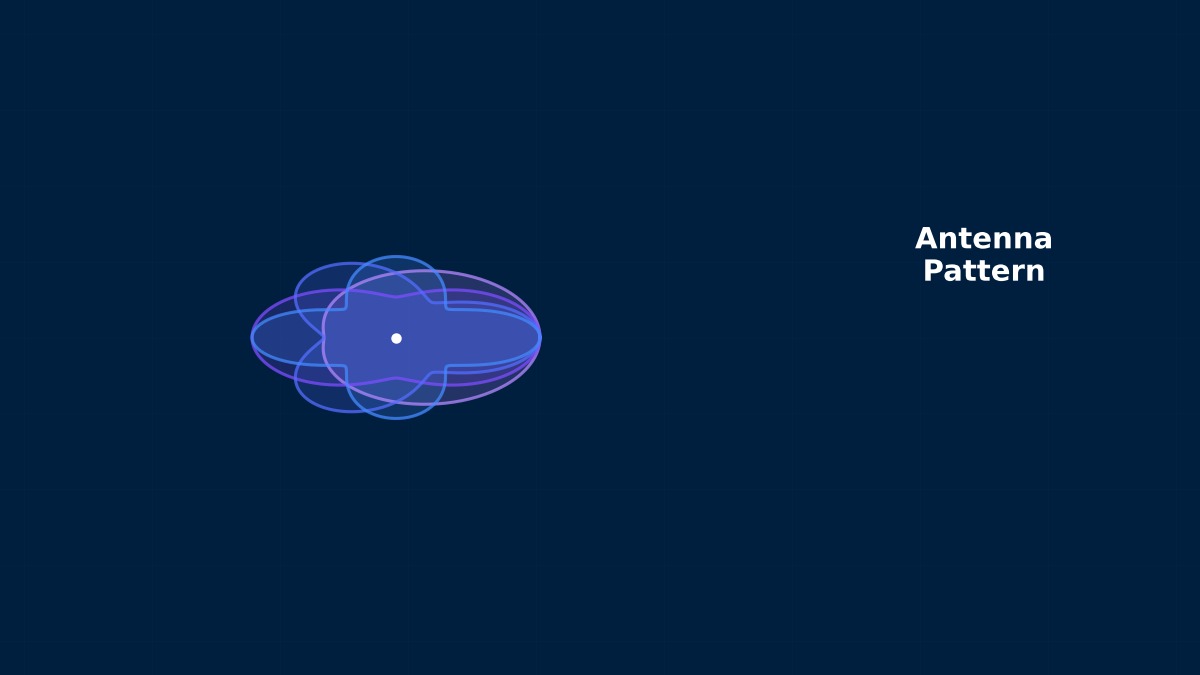
CAE Analysis of Parabolic Reflector Antennas: Theoretical Foundations
Overview — Why Parabolic Antenna Analysis is Difficult
What makes parabolic antenna analysis difficult? Isn't it just reflection off a parabolic surface?
Good question. The principle itself—that a parabolic surface converts spherical waves into plane waves—is simple. But in practical analysis, for electrically large antennas—those with an aperture diameter over 100 times the wavelength—full-wave FEM analysis runs out of memory completely. For example, a satellite broadcast antenna in the Ku band (12 GHz, wavelength 25 mm) with a 1.2 m diameter gives $D/\lambda = 48$ approximately. Even for this, solving with 3D FEM would require tens of millions of degrees of freedom.
What? Just over 1 meter in diameter and it's that heavy?
Electromagnetic field meshing requires element sizes of about 1/10 to 1/6 of the wavelength. If $D/\lambda = 48$, that's about 300 elements in one direction, and millions of elements in three dimensions. For radio telescopes exceeding 10 m in diameter, $D/\lambda$ becomes thousands, making full-wave methods impractical. That's why hybrid methods combining Physical Optics (PO) and GTD (Geometrical Theory of Diffraction) are necessary. Shielding by sub-reflectors and phase center misalignment of the feed also directly affect gain, so those aspects are important too.
Parabolic Geometry and Focal Characteristics
First, please explain the basics. Why can a parabolic "parabolic surface" collect radio waves?
A parabolic surface can be expressed in cylindrical coordinates $(r, \phi, z)$ as follows:
Here, $f$ is the focal length. The mathematically important property of this parabolic surface is that spherical waves emanating from the focal point, when incident on the reflector, have equal optical path lengths for all paths. In other words, the wavefront after reflection becomes a perfect plane wave.
I see, the phases align, so they interfere constructively. How do you decide the ratio of aperture to focal length (f/D ratio)?
The $f/D$ ratio is the most fundamental design parameter. Let's summarize typical ranges and characteristics:
| $f/D$ Range | Half-Angle $\theta_0$ | Characteristics | Application Examples |
|---|---|---|---|
| 0.25–0.35 | 90°–70° | Deep dish shape. Less demanding feed directivity. | Satellite communication ground stations |
| 0.35–0.50 | 70°–53° | Most common. Good balance between spillover and illumination efficiency. | Radar, VSAT |
| 0.50–0.80 | 53°–35° | Shallow dish shape. Good cross-polarization characteristics. | Radio telescopes |
The relationship between half-angle $\theta_0$ and $f/D$ is:
Aperture Efficiency and Sub-Efficiency Decomposition
I often hear "aperture efficiency," but what exactly is the concept?
The gain of a parabolic antenna is expressed by the following formula:
Here, $\eta_{ap}$ is the aperture efficiency, which is the ratio of actual gain to that of ideal uniform illumination. This $\eta_{ap}$ can be decomposed into the product of multiple sub-efficiencies:
| Symbol | Name | Physical Meaning | Typical Value |
|---|---|---|---|
| $\eta_{ill}$ | Illumination Efficiency | Uniformity of electric field distribution on the aperture plane | 0.75–0.85 |
| $\eta_{sp}$ | Spillover Efficiency | Loss of feed power leaking outside the reflector | 0.85–0.95 |
| $\eta_{ph}$ | Phase Efficiency | Loss due to phase errors on the aperture plane | 0.95–0.99 |
| $\eta_{pol}$ | Polarization Efficiency | Loss due to cross-polarization components | 0.95–0.99 |
| $\eta_{bl}$ | Blockage Efficiency | Blocking by sub-reflector and support structures | 0.90–0.98 |
| $\eta_{sf}$ | Surface Accuracy Efficiency | Manufacturing errors of the mirror surface (Ruze formula) | 0.85–0.98 |
About the surface accuracy efficiency, what kind of formula is the "Ruze formula"?
The Ruze formula is a famous equation that quantifies the effect of the reflector surface's RMS error $\epsilon$ on gain:
For example, if $\epsilon/\lambda = 1/20$, then $\eta_{sf} \approx 0.67$ (30% reduction). For $\epsilon/\lambda = 1/50$, $\eta_{sf} \approx 0.94$. This is precisely why the ALMA radio telescope reflector requires an RMS accuracy of 25 μm; it needs to maintain $\epsilon/\lambda \approx 1/12$ relative to the shortest observation wavelength of 0.3 mm.
Governing Equations — Aperture Integration and Gain
The far-field is calculated from the equivalent currents on the reflector's aperture plane using aperture integration. If the equivalent electric field distribution on the aperture plane is $\mathbf{E}_{ap}(x',y')$, the far-field is given by the following Fourier-transform type integral:
Here, $k = 2\pi/\lambda$ is the wavenumber, and $A$ is the area of the aperture plane. For axisymmetric feed patterns, this two-dimensional integral reduces to a one-dimensional integral over $r$ (Bessel function transformation). The gain can be expressed as:
I see, so if you know the electric field distribution on the aperture plane, you can calculate the far-field. The difference in analysis methods comes down to how you find that "electric field on the aperture plane," right?
Exactly. The choice is whether to find it approximately using the PO method or rigorously using FEM, which is determined by the "electrical size."
Parabolic Focal Convergence — Why a "Parabola" is Necessary to Capture Communication Satellites
When a feed element is placed at the focal point of a parabolic surface, radio waves reflected by the mirror surface are radiated as parallel light (plane waves). This property stems from the definition of a parabola: "the distance from the focus equals the distance from the directrix." Spherical waves from the focus all reach the mirror surface with the same optical path length, causing their phases to align. Ellipsoids or hyperboloids alone do not possess this property, so a parabolic surface is fundamental for receiving distant point sources (satellites) with high gain. However, in Cassegrain or Gregorian configurations, techniques using hyperboloid/ellipsoid sub-reflectors are employed to change the equivalent focal length.
Discretization Methods
How do you actually solve this equation on a computer?
We use spatial discretization by the Finite Element Method (FEM). We assemble the element stiffness matrix and construct the global stiffness equation.
We perform transformation to the weak form (variational form) and use Galerkin method formulation using test functions and shape functions. The choice of element type (low-order elements vs. higher-order elements, full integration vs. reduced integration) is crucial for accuracy and computational cost.